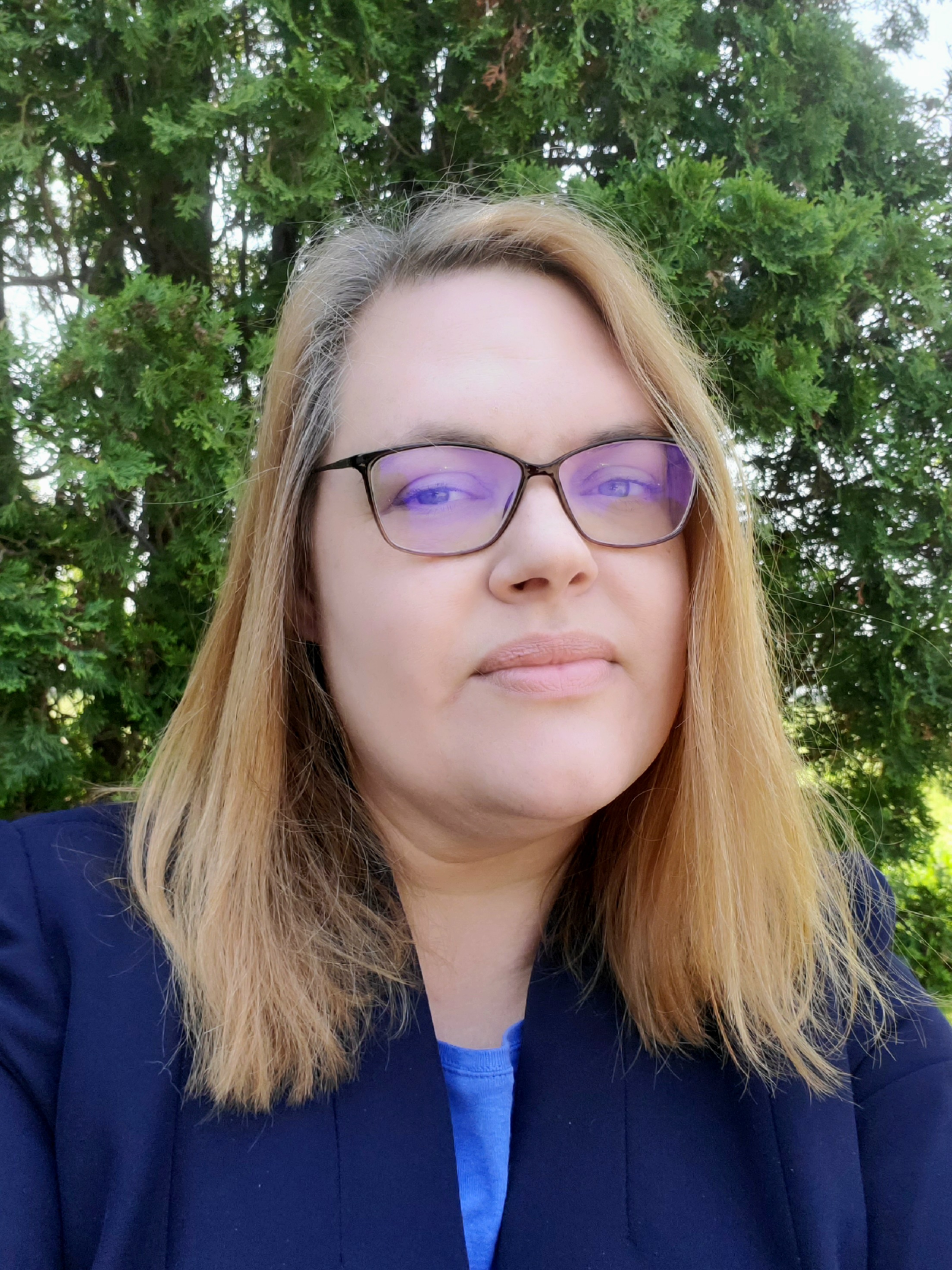
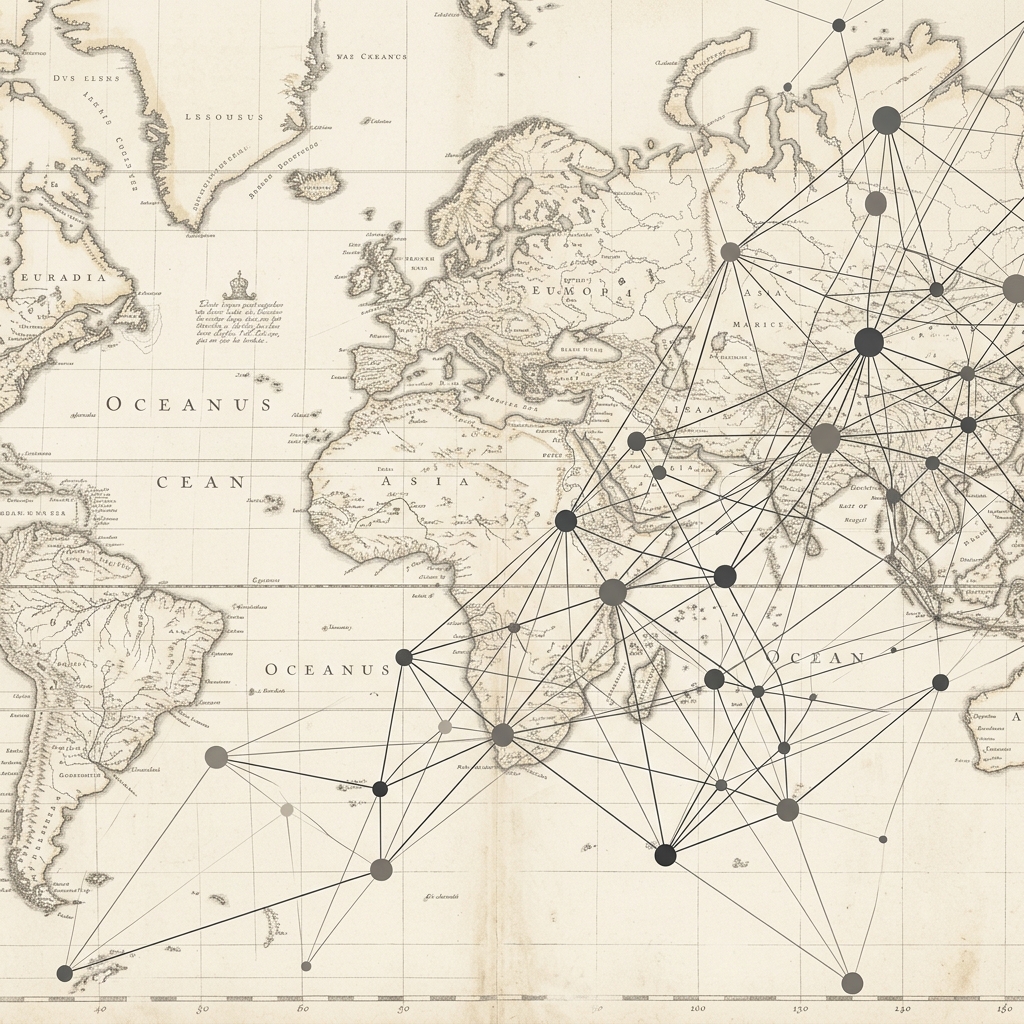
I build computational models for historical interpretation.

Analyzing political language, media serialization, and spatial narratives across messy, multilingual, and complex archives.

I am a Digital Humanities scholar whose trajectory spans economics, political science methods, high-performance computing, and computational rhetoric. My work demonstrates how data structures, sequence modeling, and visualization are enhanced by close reading, historical context, and primary evidence.

Dr. Brooke A. Luetgert
I.

Computational Rhetoric

Modeling how political persuasion constructs publics, shapes institutional trust, and guides religious and authoritarian rupture across media systems.

II.

Spatial Humanities

Reconstructing place, routes, environment, and landscapes from historical, multilingual travel narratives using RAG-assisted gazetteers (The Traveler Project).

III.

Critical Pedagogy

Teaching machine learning, text analysis, and data visualization at the University of Chicago as tools of active critical inquiry rather than detached skills.

About Me

"My scholarship lives at the intersection of computational methods and humanistic interpretation, creating reproducible workflows to understand how language shapes history."

I am a Senior Instructional Professor and the Associate Director of Curriculum for Digital Studies at the University of Chicago. In this role, I build cutting-edge curricula, advise students, assist in their computational training within areas of humanistic inquiry.

My current research focuses on two pillars: modeling political rhetoric across historical and contemporary media platforms, and spatial humanities route reconstruction through historical narratives.

Research & Projects

Democratic Repair and Authoritarian Rupture

Democratic Repair and Authoritarian Rupture: A Computational Rhetoric of Political Persuasion across Media Systems is a book-length research agenda. It models how political rhetoric constructs publics—training citizens to either trust institutions or accept authoritarian rupture—across speeches, sermons, radio broadcasts, podcasts, and translations.

Rather than relying on simple keyword counts, this project introduces structured NLP workflows to capture sequence, stance, translation drift, and rhetorical state-changes. It treats reception data (e.g. letters, hearings, public responses) as active evidence of rhetorical uptake, exploring how political ideas circulate and take hold across generations.

Active Papers:

  • The Stylistics of Persuasion: An interpretable NLP framework modeling rhetorical transitions across fascist, democratic, and populist writing.
  • From Radio Priest to Podcast Nation: Media history connecting Father Coughlin's serialized radio sermons to modern political podcasting (Charlie Kirk).
  • From Grievance to Capture: Comparative multilingual analysis of institution-as-enemy discourse across Trump, Erdogan, Putin, Merkel, and Macron corpora.
  • Lost in Official Translation: Measuring semantic drift when domestic authoritarian rhetoric is translated into official English reports.
Project Details
  • Focus: Political communication, NLP, Media history
  • Corpora: 100+ years of speeches, radio, podcasts
  • Status: Active; corpus acquisition & annotation
Methods
  • Supervised Sequence Modeling
  • Multilingual Text Alignment
  • Stance and Metaphor Analysis
  • Human-in-the-loop Validation

Traveler: RAG-Assisted Historical Gazetteer and Narrative Mapping with Niall Atkinson

Supported by the University of Chicago's Presidential Initiative for AI in the Humanities, Traveler is a spatial humanities platform. It is designed to recover route descriptions, place names, and environmental features embedded in multilingual historical travel narratives. Our emphasis is on identifying descriptions of landscapes around the Mediterranean Region as found in Medieval travel accounts.

Traveler integrates optical character recognition (OCR) and named-entity recognition (NER) with Retrieval-Augmented Generation (RAG) to query and expand historical gazetteers (such as Pleiades, GeoNames, and World Historical Gazetteer).

The platform generates interactive geospatial reconstructions and maps, allowing researchers to explore landscape classifications and travel tracks. Critically, it maintains strict document-level provenance, enabling users to jump instantly from a point on a map back to the primary text passage that describes it.

Project Details
  • Focus: Spatial Humanities, Gazetteer Design
  • Funding: UChicago Presidential Initiative
  • Status: Active platform development
Methods
  • Named-Entity Recognition (NER)
  • RAG-Assisted Disambiguation
  • OCR Document Pipelines
  • Geospatial Mapping & visualization

Twitter in Turkey

Co-Director (University Grant Funded): Assembled and analyzed a comprehensive corpus of Turkish Twitter users to map the political communication space. Found that opinion leaders shape political discourse far more than official policy makers, highlighting clear informational asymmetries. Results published in Turkish Studies.

EU legislative transposition data (CELEX / PreLex)

Principal Investigator: Collected, scraped, and validated cross-national legislative transposition data across six countries spanning twenty-five years. Resulted in a highly cited methodology paper in European Union Politics (awarded Best Article of the Year) resolving long-standing debate between qualitative and quantitative compliance scholars.

Marie Curie Career Integration Grant (CORDIS FP7)

Principal Investigator: Built predictive models of incumbent party electoral support using Python for data merging and R for visualization. Created automated scraper models to dynamically extract, clean, and update legislative data across European online resources.

Past Roles
  • Co-Director: Sabanci University
  • Postdoctoral Fellow: Mannheim Center
  • Principal Investigator: Marie Curie CIG
Past Methods
  • Web Scraping (Python / C++)
  • Social Network Analysis (SNA)
  • Hierarchical Linear Modeling
  • Database Design (SQL / Access)

Publications & Grants

Selected Publications

Grants & Grant-Funded Projects

Beyond the Archives

Horses, Family, and the Soil

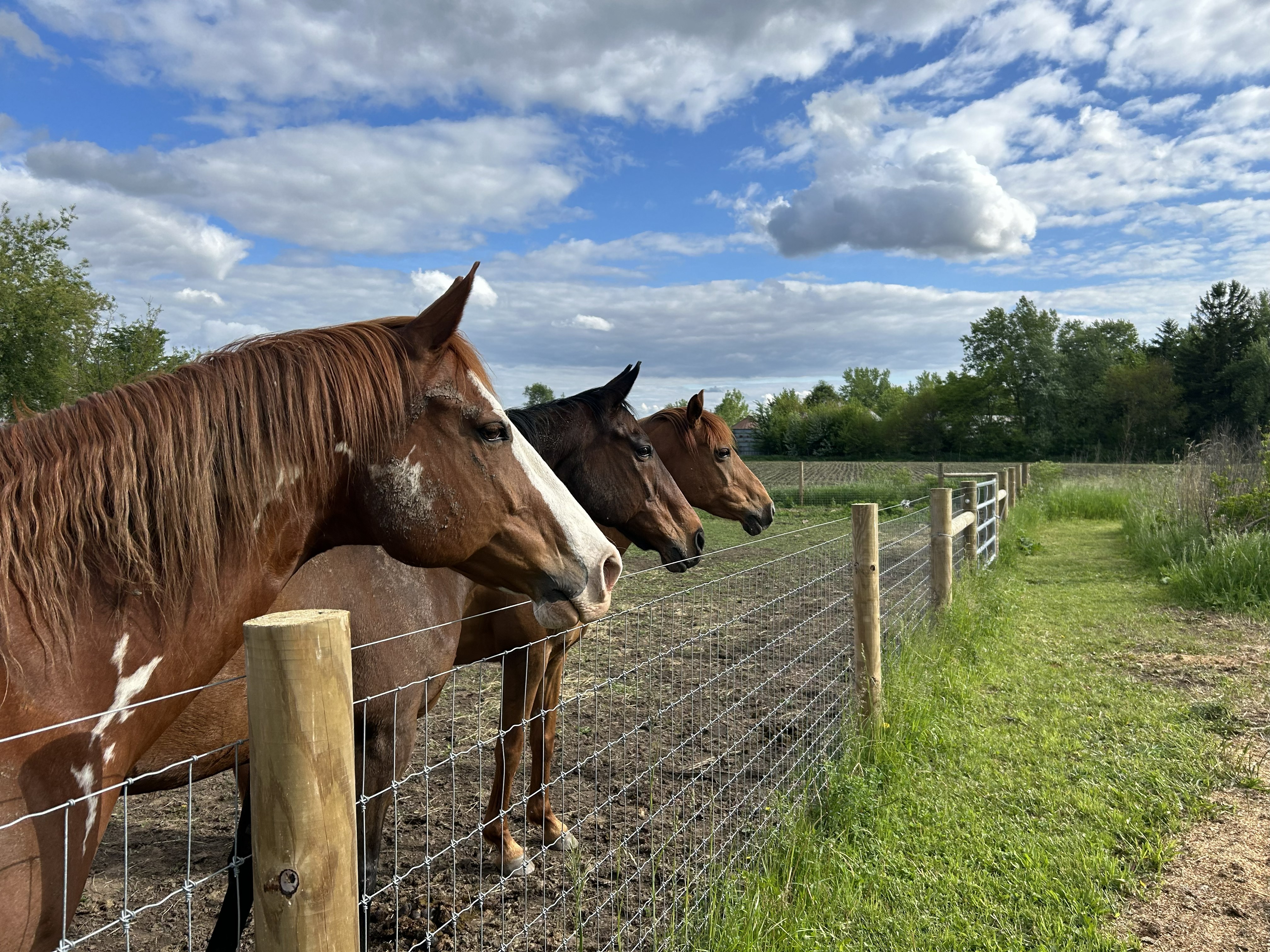
While my scholarship resides in computational models and historical archives, my life is grounded in Elburn, Illinois. Running our family farm provides a vital, tactile counterweight to digital research and computational rhetoric.

Whether working with the horses, or laughing with my three beautiful babies, the daily cycles of the farm offer a restorative space. I believe that humanistic inquiry is enriched by a life fully lived outside the university, keeping my research anchored in the concrete, natural world.The schism between rural family life and urban work continues to inspire my research.

Horses at home in Elburn, Illinois
Elburn, Illinois

Academic & Research Experience

Senior Instructional Professor & Associate Director of Curriculum

2022 – Present
Digital Studies / Forum for Digital Culture, University of Chicago
  • Direct curriculum development, student advising, computational training, and academic programming within the Digital Studies ecosystem.
  • Teach advanced courses in deep learning, machine learning, data visualization, and artificial intelligence applications for the humanities and social sciences.
  • Build interdisciplinary student research pipelines and collaborative public digital scholarship projects.

Senior Computational Scientist

2019 – 2022
Research Computing Center, University of Chicago
  • Served as Social Sciences Division liaison for high-performance computing, large-scale data collection, computational analysis, and faculty research support.
  • Taught data analysis and machine learning methods to humanities and social science students, translating technical workflows into research-ready practices.

Owner

2018 – Present
CodeCraze, LLC, Batavia, Illinois
  • Developed community-facing applied coding and robotics curricula in Python, JavaScript, C++, and robotics, connecting technical fluency with local public education.

Assistant Professor of Political Science & Methodology

2011 – 2017
Sabanci University, Istanbul
  • Taught courses in quantitative methods, text analysis, IR theory, and computational modeling.
  • Directed international research consortia; recipient of a Marie Curie Career Integration Grant.

Interim Professor of International Relations

2010 – 2011
University of Mannheim
  • Taught graduate and undergraduate courses in international relations theory, European governance, and game theory.

Education

PhD in Economics

2007
German University of Administrative Sciences, Speyer
  • Graduated summa cum laude. Dissertation on macroeconomic indicators, public opinion, legislative activity, and European Union support.

MSc in Political Economy

2000
London School of Economics
  • Graduated with Merit Honors. Focus on social and economic reconstruction in post-1990 Eastern Europe.

BA in International Relations and German Studies

1999
Wellesley College
  • Graduated cum laude. Junior year abroad at Universität Konstanz.

Grants & Distinctions

Marie Curie Career Integration Grant

Sabanci University

Funded by EU CORDIS FP7 framework for empirical social science research.

Margarete von Wrangell Postdoctoral Fellowship

University of Mannheim

Postdoctoral research grant funded by Land Baden-Württemberg.

Best Article of the Year Recognition

2009

Awarded by the journal European Union Politics for the article "Mixing Methods."

Technical Expertise

Code & Analysis

Python R SQL JavaScript / D3.js C++ Data Visualisation

NLP & Artificial Intelligence

spaCy TensorFlow / Keras Sequence Modeling OCR Pipelines RAG Workflows Stance Detection

Contact

If you are interested in collaborating on digital humanities projects, text analysis methods, historical mapping, or discussing computational rhetoric, please reach out.

Civic Engagement

Applied public work beyond the university

My academic work is rooted in computational humanities, public evidence, and interpretive infrastructure. These commitments also shape the applied and civic organizations I help build and support.

Founder & Principal

Cohesion Lab

Cohesion Lab, LLC is our applied humanities data studio, built to help cultural institutions, nonprofits, public agencies, and community organizations turn complex data into usable public knowledge. The work brings together NLP, GIS, archival data, visualization, and interpretive design to create thoughtful digital infrastructure for civic and cultural life.

Visit Cohesion Lab →
Board & Community Support

IDEP

I also support IDEP as a board member and community partner. My role is supportive rather than directive: I contribute strategic, organizational, and digital-methods capacity to a broader community action effort led by its core organizer and mission.

Visit IDEP →